Lessons

Electronic Music Lessons in Falmouth
Calm, hands-on lessons exploring electronic instruments such as modular synthesizers and drum machines.
Sessions focus on listening, experimentation and understanding how sound works, rather than formal music theory or traditional notation.
Separate sessions run for teenagers and adults.
Lessons take place in Falmouth and are easily reached from Penryn and surrounding areas.
About the sessions
These lessons focus on learning through direct, hands-on engagement with electronic instruments. Participants explore sound, rhythm and musical structure their own pace.
Sessions are calm, focused and pressure-free. There is no expectation to perform, record or produce finished work.
Teaching is responsive rather than prescriptive, allowing space for repetition, troubleshooting and curiosity-led exploration.
What happens in a lesson?
Learners explore electronic instruments step by step, developing musical ideas along the way.
Sessions may include:
- creating rhythms on drum machines
- shaping sounds with modular synthesizers
- exploring filters, envelopes and modulation to shape sound
- building and developing musical patterns and structures
Sessions move at a suitable pace. There is time to listen carefully, experiment and ask questions.
As learners become more confident, sessions can gradually expand into more advanced ideas around rhythm, sound design and musical structure.
What are modular synthesizers and drum machines?
These lessons use hands-on electronic instruments that let learners shape sound and rhythm directly, rather than working through notation, screens or fixed presets. Many people have heard these sounds in films, games and electronic music. Few have had the chance to try the instruments themselves. In the lessons, learners explore them step by step, starting with simple patches and gradually building richer sounds and patterns.
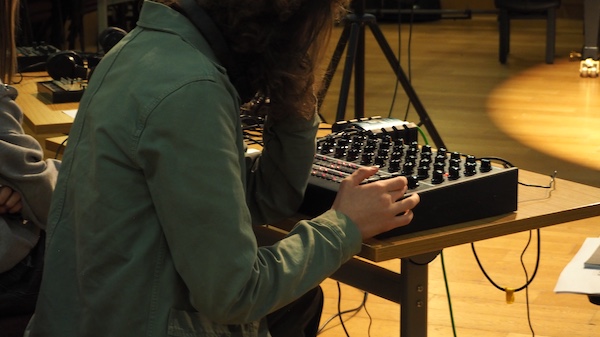
Modular synthesizers are electronic instruments used by connecting individual sound modules with patch cables to design, shape and control sound. Each session involves creating a new instrument from scratch, shaping sound, rhythm and movement in an open-ended way.
They are well suited to learners who enjoy experimenting, problem-solving and working in an exploratory way.
Drum machines are instruments for creating and sequencing rhythm. Sessions explore pattern, repetition, variation and timing through hands-on work with hardware, developing grooves and musical ideas.
Across both pathways, sessions revisit fundamentals while also exploring randomness and chance in sound and rhythm — an important and enjoyable part of electronic music-making.
Choose a pathway
Learners choose one main focus:
Modular synthesizers
Exploring sound design, rhythm, texture and signal flow through patching, with time to repeat processes and explore musical ideas through experimentation.
Drum machines
Working with rhythm, sequencing and pattern using hardware, developing grooves and musical ideas through hands-on practice.
Learners usually stay with one pathway to support continuity and reduce admin, though switching may be possible if there is availability.
Who the lessons are for
Lessons are available for:
• Teenagers (small groups)
• Adults (one-to-one)
Teenagers and adults attend separate sessions.
Sessions can suit learners who find traditional music education challenging, including some neurodivergent learners or those who experience social anxiety.
If you’re unsure whether the sessions would be a good fit, we’re very happy to talk things through before booking.
Tutors and approach
Sessions are led by experienced tutors who are established practising musicians. The lessons are welcoming to complete beginners but also develop into more advanced musical ideas over time.
The programme is delivered by the team behind Cornwall Youth Noise Orchestra, a programme helping young people explore electronic music and creative technology.
The work has been featured by The Guardian, BBC Radio 3, BBC 6 Music, Uncut and Electronic Sound.
Tutors are DBS checked and safeguarding trained, with experience working in schools and home education settings.
Using software alongside electronic instruments
Alongside hands-on work with physical instruments, sessions may also use virtual modular software, which is widely used by professional musicians in live and studio contexts.
This allows learners to continue exploring patching, sound design and signal flow between sessions, including those who may not have access to modular synths. The software runs on Windows and macOS.
Laptops can be provided during sessions, and learners may bring their own laptop if they wish to save work directly between sessions. The core focus of the lessons remains on learning modular concepts through direct, hands-on practice, whether in instrument or software form.
Signal processing and wider skills
Electronic instruments such as modular synthesizers and drum machines are built around signal processing — the same underlying principles used in fields such as engineering, physics, audio technology and data systems.
Through hands-on patching and sequencing, learners encounter ideas such as signal flow, feedback, modulation, timing and systems thinking in a practical, intuitive way.
For some learners, this connects naturally with interests beyond music, including technology, engineering and science.
These ideas are explored through making and listening, rather than formal instruction, and no technical background is required.
Relationship to free projects
These lessons are a separate, paid programme delivered by Moogie Wonderland.
They run independently of our free projects, such as Cornwall Youth Noise Orchestra, which operate when external funding is available and are not always running.
For some learners, the two complement each other well. For others, these lessons provide continuity when free projects are not in operation.
When and where
Mondays
Kimberley Park Lodge, Falmouth
Sessions run on Mondays in the late afternoon and early evening. Exact times are confirmed on enquiry.
Pricing
Teenagers
£100 for a block of 5 sessions
40 minutes per session
Sessions include a maximum of two learners
Blocks are designed to allow time for repetition, exploration and confidence to build gradually.
Teenager taster session: £22 (40 minutes)
Adults
£30 per 40-minute session
1:1 sessions only (limited availability)
Taster sessions (adults)
Charged at the standard adult session rate.
All equipment is provided.
Start with a taster session
If you’re curious about the lessons, the easiest way to begin is with a taster session. Most people start this way before deciding whether to continue.
This gives you the chance to explore the instruments, see how the sessions work and ask any questions before committing to regular lessons.
Tasters are available for both teen and adult sessions.
To arrange a taster session, email:
A short message is fine — just let us know the learner’s age and whether you’re interested in drum machines or modular synthesis.
How lessons work and booking
How lessons work:
Teen sessions run in five-week blocks, helping learners build skills steadily from week to week.
Adult sessions are one-to-one, allowing the pace to adapt to the individual learner.
Most new learners begin with a taster session before joining regular lessons.
Booking:
To enquire about availability or arrange a taster, please email:
If helpful, include:
• learner’s age (teenager or adult)
• preferred pathway (modular synthesizers or drum machines)
• any access considerations (optional)
Places are limited.
Booking and cancellation information is available here: Booking & cancellations
Frequently asked questions
Do I need musical experience?
No prior experience is needed – many learners start with no background in electronic music. Curiosity is enough. Many learners are trying electronic instruments for the first time.
The lessons focus on learning through listening and hands-on exploration, so beginners can quickly start creating sound.
What age range are the teenage sessions for?
Teenage sessions are aimed at secondary school–aged young people. If you’re unsure whether the sessions are suitable for a particular age, please get in touch to discuss.
Are teenagers and adults taught together?
No. Teenagers and adults attend separate sessions.
How do the blocks of sessions work for teenagers?
Teenagers attend in blocks of five sessions, which helps build familiarity with the instruments and allows ideas to develop gradually over time.
Sessions revisit core concepts regularly, so learners have space to consolidate and settle in as the block progresses.
What happens if a learner misses a session or arrives late
We understand that occasional absences or late arrivals happen.
Sessions run to a fixed length and can’t usually be extended, including if a learner arrives late. This helps keep the sessions calm and fair for everyone, and allows the programme to run smoothly.
Tutors revisit core ideas regularly, and sessions allow time for repetition and consolidation, so learners can usually rejoin confidently even if they miss part of a session.
If there are ongoing attendance or timing concerns, please get in touch and we’re very happy to talk things through.
Can someone join part-way through a block?
In some cases, yes — depending on availability. Sessions revisit fundamentals and allow time for repetition, which can help late joiners settle in.
Please contact us to discuss current availability.
What equipment is used in the sessions?
Sessions use modular synthesizers and drum machines. All equipment is provided.
Virtual modular software may also be used alongside hardware, reflecting common professional practice and allowing learners to continue exploring ideas between sessions.
Do students need to bring or buy any equipment?
All instruments are provided for the sessions.
Learners should bring their own wired headphones to use during sessions. If this is a barrier, please get in touch in advance and we’ll do our best to help.
Some learners choose to explore software or hardware independently over time, but this is entirely optional.
Are the sessions suitable for neurodivergent learners or those with social anxiety?
Sessions are structured to support a range of learning styles. Group sizes are small, the pace is gentle, and there is no pressure to perform.
If you’d like to discuss access needs or suitability before booking, we’re very happy to talk things through.
A Moogie Wonderland programme
Supported by Falmouth Town Council